Quick answer: Compare insulation bids only after each contractor has priced the same work. Verify locally required credentials and insurance, then compare coverage, materials, target R-value, air sealing, preparation, exclusions and completion records. Ask contractors to explain substantial price differences rather than automatically choosing the lowest bid. The Federal Trade Commission recommends this approach to home-improvement estimates. (consumer.ftc.gov)
This guide is for U.S. homeowners. Licensing and contract requirements must be checked where the property is located; the California example below is not a nationwide rule.
1. Give every contractor the same written scope
Before comparing totals, write a short project description and ask each bidder to respond to it. California’s Contractors State License Board recommends obtaining at least three written bids based on identical plans, specifications and scope. That is a useful comparison method even when your project is elsewhere. (cslb.ca.gov)
Your comparison sheet should identify:
- Work locations: attic floor, roofline, exterior walls, crawl-space walls or another clearly defined area.
- Existing conditions: what the contractor observed and what remains unverified.
- Coverage: the measured area included, with inaccessible sections identified.
- Preparation: access, protection, air sealing and any proposed removal.
- Finished condition: cleanup, disposal and repairs to openings or finishes.
- Proof of completion: photographs, material records and any agreed testing.
Ask each contractor to mark every item included, excluded or requires investigation. Treat a blank as an unanswered question, not an inclusion.
Resolve location differences first. For example, do not treat “insulate the attic floor” and “insulate the roofline” as interchangeable descriptions. Ask each bidder to explain the proposed boundary of the conditioned space before comparing materials or prices.
2. Verify licensing and insurance independently
Start with your state or county government to confirm which contractor credentials apply. The FTC advises checking the license with the relevant government authority and requesting proof of insurance. Do not rely solely on a number printed on a proposal. (consumer.ftc.gov)
California example: CSLB provides a license-status lookup, and California has a C-2 “Insulation and Acoustical Contractor” classification. Use the board’s records and classification guidance to check the proposed work; do not assume another state uses California’s categories. (cslb.ca.gov)
Record the contracting business’s legal name and ask:
- Does the license or registration belong to that business?
- Is its status appropriate for the proposed work?
- Will employees or subcontractors perform the installation?
- Who will supervise the work and handle callbacks?
Request evidence of commercial general liability coverage and workers’ compensation coverage, or an explanation of any claimed exemption. Verify the information with the insurer or agent. DOE expressly recommends contacting the insurer to confirm that a contractor’s liability policy is valid. (energy.gov)
Check policy dates against the expected work period and resolve business-name discrepancies before signing. For questions about your own exposure or coverage, consult your insurer rather than relying on the salesperson’s assurance.
3. Match materials, quantities and target performance
“Add insulation” is not a complete material specification. Ask each bidder to identify the manufacturer, product, installation location, coverage area and proposed thickness or application specification.
R-value measures resistance to heat flow. The appropriate level depends on climate, the home’s construction and the location being insulated—not simply which bid offers the largest number. (consumer.ftc.gov)
For every proposal, ask:
- Does the stated R-value describe new material alone or the intended final insulation level, including existing insulation?
- How was the existing insulation assessed?
- What area is excluded from the quantity?
- What manufacturer documentation supports the proposed installation?
Under the federal insulation rule, installers must show customers the applicable product fact sheets before they agree to buy. For loose-fill products, coverage charts include information such as initial installed thickness, minimum settled thickness and bag quantities. Ask the contractor to connect the proposed quantities to that product’s documentation. (govinfo.gov)
A practical check is to place the material specification beside the drawing or area description. Can you tell exactly what will go where? If not, request a revised proposal.
Do not award extra credit for an unexplained “premium” label. Ask what documented property or installation detail makes that alternative suitable for your project.

4. Separate air sealing, preparation and safety work
For attic projects, ENERGY STAR recommends sealing attic-floor air leaks before adding insulation. Ask for a separate description of air-sealing work rather than accepting “seal as needed.” (energystar.gov)
Useful questions include:
- Which accessible leakage locations are included?
- Is sealing and insulating the attic hatch included?
- How will existing insulation be moved where access is necessary?
- What work cannot be reached, and how will that be documented?
- For a vented attic, how will soffit ventilation paths remain clear?
Also ask what conditions would stop the job. ENERGY STAR identifies damp insulation, moisture damage, improperly terminated exhaust vents, inadequate attic ventilation and knob-and-tube wiring as issues needing professional attention before proceeding. Vermiculite insulation may contain asbestos and should not be disturbed casually. (energystar.gov)
Do not make insulation removal an automatic requirement. ENERGY STAR notes that existing attic insulation can often remain when it is not wet, moldy, smelly or contaminated with animal waste. Ask why removal is proposed and who will assess questionable material. (energystar.gov)
Have qualified professionals address electrical, combustion, roofing and suspected-asbestos concerns. The bid should identify responsibility, not substitute a vague “homeowner to resolve” exclusion for a workable plan.
5. Work through a side-by-side bid comparison
The following is a hypothetical comparison, not a description of actual contractors, prices or market rates. Both proposals concern the same attic project.
| Comparison item | Bid A: lower initial total | Bid B: higher initial total |
|---|---|---|
| Coverage | “Entire attic”; no area recorded | Measured area recorded; inaccessible section identified |
| Material | “Blown insulation” | Manufacturer and product identified |
| Performance | “Upgrade R-value”; unclear whether added or final | Intended final level stated, with existing-insulation assumption |
| Air sealing | Not mentioned | Included locations listed |
| Ventilation protection | Not mentioned | Work to preserve ventilation paths described |
| Existing insulation | “Removal extra” | Retention proposed, subject to condition assessment |
| Disposal and cleanup | Unspecified | Ordinary project debris and cleanup included |
| Completion records | Invoice only | Installation record and agreed photographs listed |
| Finish repairs | Unspecified | Repair responsibility stated |
Work the comparison in this order:
First, ask Bid A to confirm the coverage area, material and performance target. Until those match, the proposals are not describing equivalent work.
Second, request written prices for the missing air sealing, ventilation protection, cleanup and documentation. Ask whether these are firm additions or allowances that could change.
Third, examine Bid B’s exclusions. A more detailed proposal still needs clear answers about inaccessible areas and unforeseen conditions.
Finally, compare the revised complete totals. Bid A may remain the better value after clarification. Alternatively, its apparent discount may disappear once the agreed work is included.
The decision is not “cheap versus expensive.” It is whether a verified contractor has offered a complete, understandable scope at an acceptable price.
6. Clarify exclusions, permits and change orders
Ask every bidder to answer these questions in writing:
- Air sealing: “What is specifically excluded from your sealing work?”
- Disposal: “Does removal pricing include containment, hauling and disposal, and what material does that price assume?”
- Finish repairs: “Who restores drywall, siding, trim or paint after access holes are made?”
- Access: “Who moves stored items, creates openings or restores removed flooring?”
- Permits: “Who determines whether permits are required, obtains them and includes the fees?”
- Unexpected conditions: “What happens if the crew finds dampness, pests, damaged wiring or questionable insulation?”
Confirm permit requirements with the local building department. Be cautious if a contractor insists that you obtain required permits without explaining why; the FTC identifies requests for homeowners to obtain permits as a potential scam warning sign. (consumer.ftc.gov)
For additional work, request a written change-order process: describe the discovery, proposed remedy, price adjustment and schedule effect, then obtain authorization before proceeding.
Do not convert an unknown into an invented comparison price. Mark it unresolved and seek a priced clarification or further assessment.
7. Compare warranties and payment terms separately
Use a warranty checklist rather than comparing headline durations alone. Request the actual terms and distinguish the manufacturer’s product warranty from the installer’s workmanship promise.
Ask:
- Who is responsible for responding?
- What defects or installation problems are covered?
- Are labor, removal and reinstatement included?
- What exclusions apply?
- What documentation must you keep?
- How is a claim submitted?
Treat an oral promise as unfinished paperwork until it appears in the agreement. The FTC recommends including promises about scope and costs in the written contract. (consumer.ftc.gov)
Also compare the deposit, progress payments, estimated dates and conditions for final payment. Do not assume a deposit percentage suggested online is lawful everywhere: some states limit down payments. The FTC advises against full payment upfront and recommends checking local requirements. (consumer.ftc.gov)
Ask recent references about communication, changes, cleanup and callbacks—not just whether they liked the crew. DOE recommends checking references and investigating consumer complaints before hiring. (energy.gov)
8. Agree on completion evidence before choosing
Decide what you will receive at handover while you still have the bids in front of you.
The federal insulation rule requires installers to provide a contract or receipt documenting the insulation installed. For most insulation other than loose-fill and reflective products, the receipt must show coverage area, thickness and R-value, and be dated and signed. Loose-fill records must include coverage area, initial installed thickness, minimum settled thickness, R-value and bags used. (govinfo.gov)
Beyond that required documentation, consider requesting:
- Photographs of agreed air-sealing locations before they are covered.
- Photographs showing completed coverage and access details.
- A list of deviations from the original scope.
- Permit closeout records where applicable.
- Written warranty terms and a contact for corrections.
- Any testing reports expressly included in the agreement.
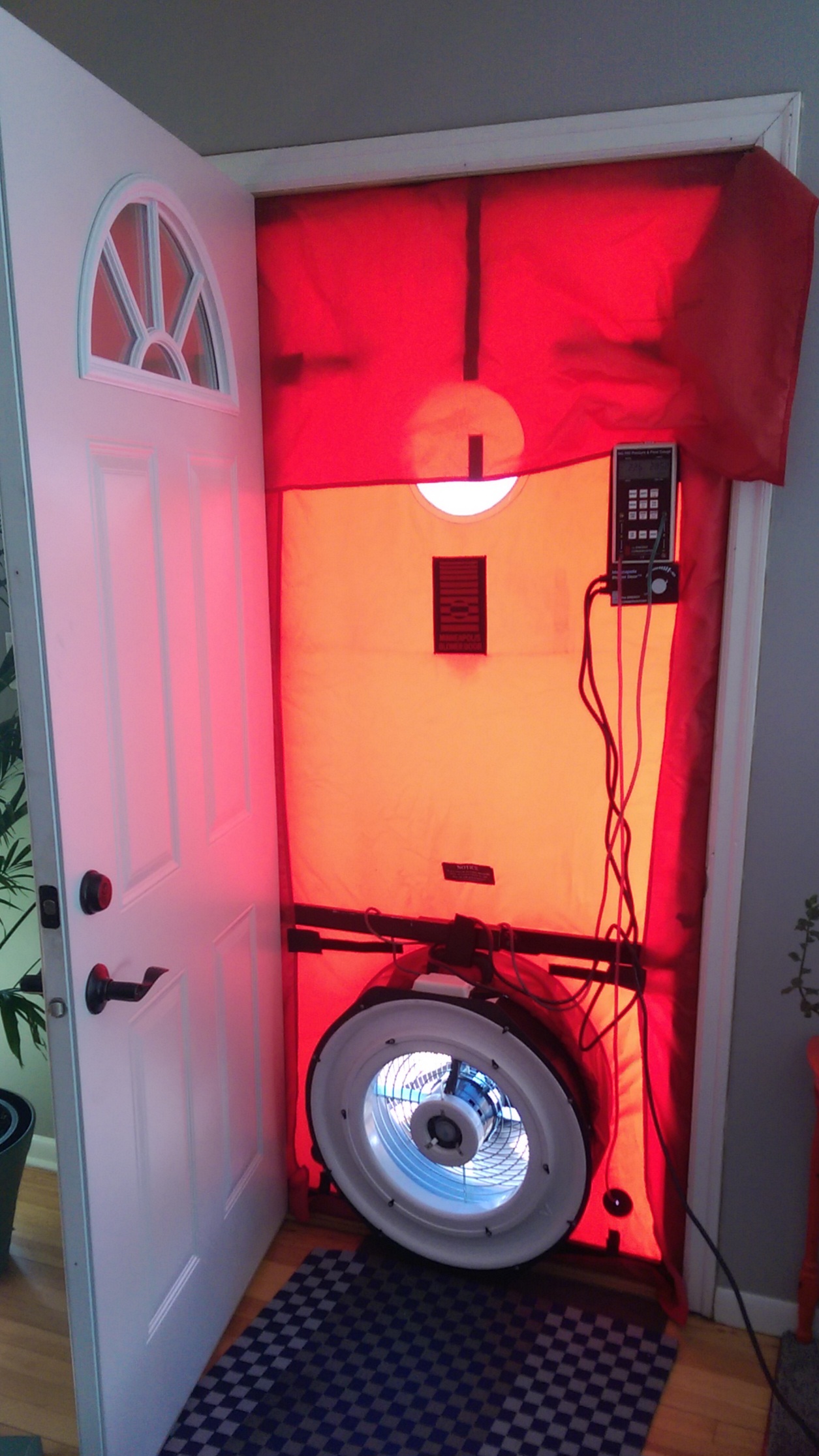
If blower-door testing is proposed, ask whether both baseline and completion testing are included, who performs it and how the results will be explained. Ask separately how ventilation needs will be assessed.
For fuel-burning equipment in an attic, ENERGY STAR recommends professional HVAC combustion-safety testing after air sealing. Make responsibility for that work explicit. (energystar.gov)
Final selection check: Choose only after the scope, credentials, unresolved conditions and handover requirements are clear. Then use price to compare the complete offers—not to guess what an incomplete offer might eventually include.